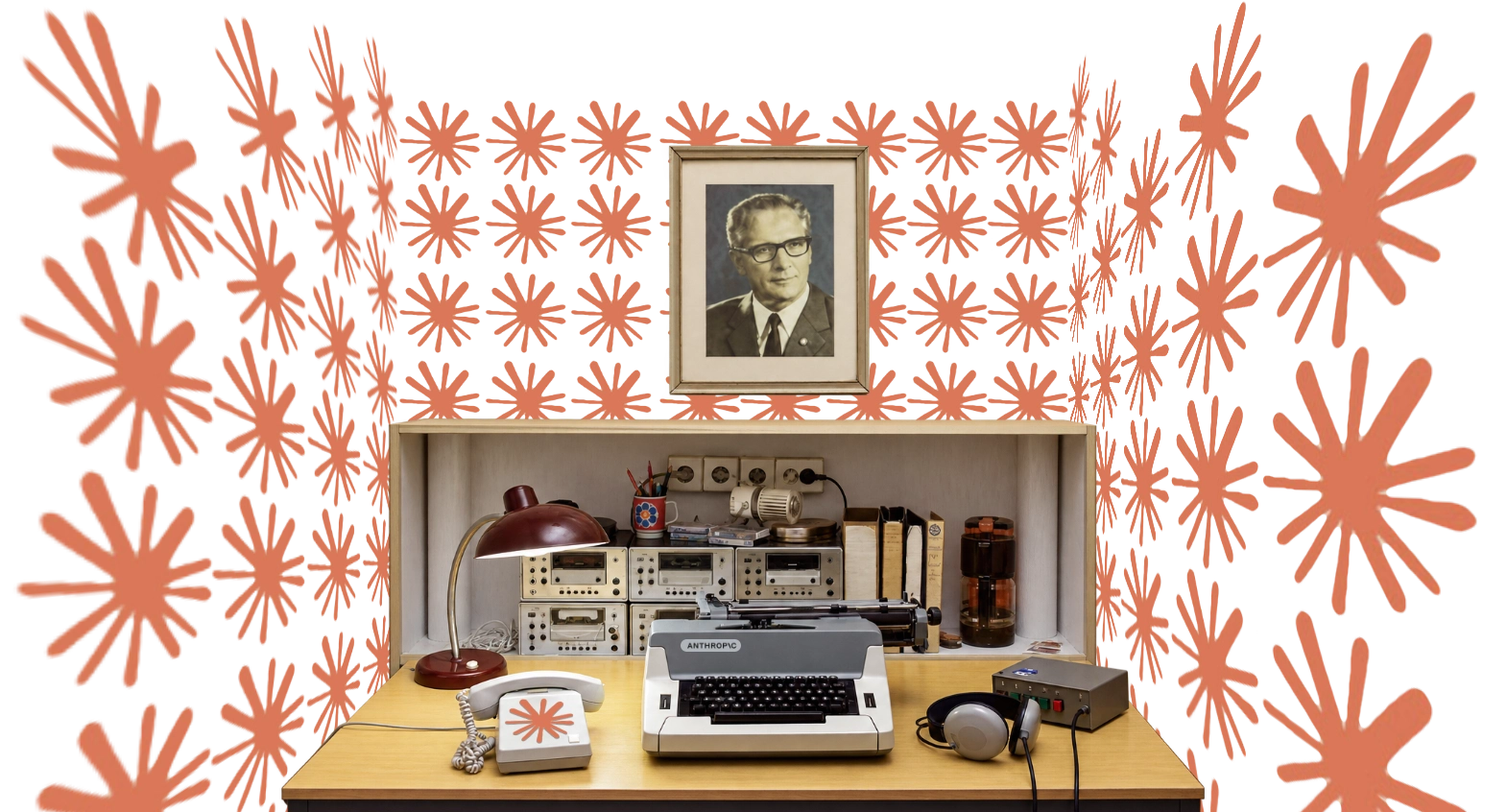
The new European AI transparency rules were supposed to protect consumers from being manipulated by machine-generated texts. In reponse, Anthropic announced that it would introduce text watermarks for its AI assistant. OpenAI followed suit. Instead of protecting the consumer, watermarks further the growth of a rising AI Stasi using AI tools to accuse others of using AI.
Watermarks and the spirit of general public surveillance create a culture of fear and distrust. Reading and writing should enrich, delight and liberate us. As makers of writing tools and lovers of literature, poetry and philosophy, iA must try to do better than OpenAI and Anthropic.1 Since 2023, iA Writer has let writers mark and remember which words came from AI.
Watermarks are AI in AI
When Claude has several words to pick from, a secret key helps it choose. Those choices leave a hidden pattern. By turning every text into a potential trap, it turns the relationship between reader and writer upside down. What used to be a respectful give and take of human attention turns into a culture of fear of being accused and suspicion of technological fraud.
Editing a passage slowly erases its watermark. And it cements the problem with using AI. That we use AI not just to read and write but to check if AI has been used to fool us, or if it looks like we used AI even if we didn’t. If we continue like this reading and writing is not fun at all anymore. What should be done instead is proactively encouraging transparency and careful use of AI tools. Like this:
AI Checkers are AI in AI
Pangram2 looks for patterns that it associates with AI writing, even in prose that predates watermarks. Readers have used its scores to accuse authors of passing off generated prose as their own.3
A writer can deny the accusation4 and still find themselves answering for a score.5 What follows plays out like the numbered lines of a simple BASIC program:
10 Scan a text for typical AI writing patterns
20 Use AI recognition tools like Pangram to find proof
30 Accuse authors in public
40 Investigate the author for other plagiarism
50 Question the author’s denial
60 GOTO 10
Respect for the reader turns into the fear of getting caught or wrongly accused and trialed in public. Writing becomes a potential crime. You may be guilty of fraud or not,6 whether you know it or not. Literature itself comes under suspicion.
Why Should We Care?
A study of 14,000 self-published novels on Amazon found that one in five had its prose flagged by an AI checker.7 It’s not an overwhelming problem yet, but we are at the beginning of the erosion of trust in literary language and the value of literature, and art in general: If robots can write poetry and literature, maybe poetry and literature, music, well, all arts are not what makes humans human and more than human?
Your average AI bro may turn the argument upside down and say: “If AI wins literary prizes, maybe it’s not a problem but a sign that AI is great?” But…
But AI can be Great!
So. Okay. We can use AI to prepare, debate, spell check, fact check, to shorten our overlong repetitive text and to outdo ourselves. And AI has become part of our lives. Why shouldn’t it help or become the topic of literature and philosophy?8
On the other hand, AI can destroy the craft by producing something that seems to be literature, while making a mockery of it. AI-generated text follows the common structural pattern of literature. It simulates what literature sounds like without the initial motivation: the necessity to express something in the form of a story or poem that cannot be expressed otherwise.
How do we know that AI doesn’t produce literature, that AI doesn’t feel? One could argue that we need a human body and mind to feel and mean what another human body feels and means. But we don’t need to go this far. We can simply ask:
- Why do people pretending to be authors let robots write something that resembles a novel? Because it makes money. And maybe it earns them some fame.
- Why do authors write novels and poets write poems? Do they not need to make a living? Is not almost every author also a bit of a narcissist, thirsting for fame? Certainly. But if writing were about making money, every author would be better advised to work in finance.
Keep ‘Em Separated
Separating AI and human language is an ethical, not a legal requirement. Text editors that track everything we write so that we’re punished if we write the wrong way are not helping anyone to express themselves freely. Technology that tricks those who use it is not a real help. It doesn’t invite people to act responsibly.
People can forget what they typed and what they pasted in. This is why the difference between human and machine needs to remain transparent throughout the writing process. We can put the author in control over what is real, and what is generated.
We cannot solve the fundamental problems created with AI by stapling more layers of AI on top. iA Writer avoids injecting AI into the writing process. It lets us mark a text’s authorship.9 As soon as Apple introduced Apple Intelligence, we got iA Writer to mark it automatically.10
Since Version 8.0 iA Writer works with CLIs so that if you use AI to edit your text you can see clearly and in color what has been added and deleted by AI.11
Conclusion
If you use AI, declare where exactly. Don’t just write a general statement, show us exactly what you wrote and what is generated. Treat AI like a quote.
Before demanding attention, we should weigh our words with care. We must know what we’re saying. We must mean that which we expect others to read. iA Writer’s Authorship does not celebrate or condemn AI tools; it’s there to help us see who contributed to what.
-
The European transparency rules took effect on August 2, 2026. Providers of systems already on the market have until December to comply with the marking requirement. Anthropic announced watermarking for future Claude models. OpenAI announced an EU rollout for eligible ChatGPT and Codex text. API customers worldwide can opt in for supported models. ↩︎
-
See Controverse Thélyson Orélien: ce qu’il faut savoir sur Pangram, in Radio-Canada ↩︎
-
The Haitian-Canadian author Thélyson Orélien won the Prix Fnac for C’était ça ou mourir. On September 25, the Académie Goncourt removed his novel from its longlist. ↩︎
-
The same thing happened to Simbarashe Steyn Kundizeza. See the Caine Prize announcement, the report in The Atlantic and Kundizeza’s response to the Associated Press. ↩︎
-
He denies all wrongdoing. See Libération. ↩︎
-
Jamir Nazir won the Caribbean round of the Commonwealth Short Story Prize for The Serpent in the Grove. Readers cited Pangram too. The Commonwealth Foundation investigated and concluded that the winning writers had written the stories themselves. Nazir went on to win the overall prize. See the accusation, the Foundation’s findings and the prize result. ↩︎
-
See Generative AI floods and dilutes the market for books. ↩︎
-
Rie Qudan’s Sympathy Tower Tokyo won Japan’s Akutagawa Prize in 2024. In her novel, a character talks to a chatbot. Qudan explained that for some of the chatbot’s lines, she quoted ChatGPT. Qudan describes how she wrote the exchange in an interview with The Guardian. ↩︎
-
See our blog post on iA Writer 7 ↩︎
-
Apple’s Privacy Permissions limit access between apps, so we cannot automate AI highlighting. Many of our customers have connected external agents to Authorship. More in See what AI wrote ↩︎
-
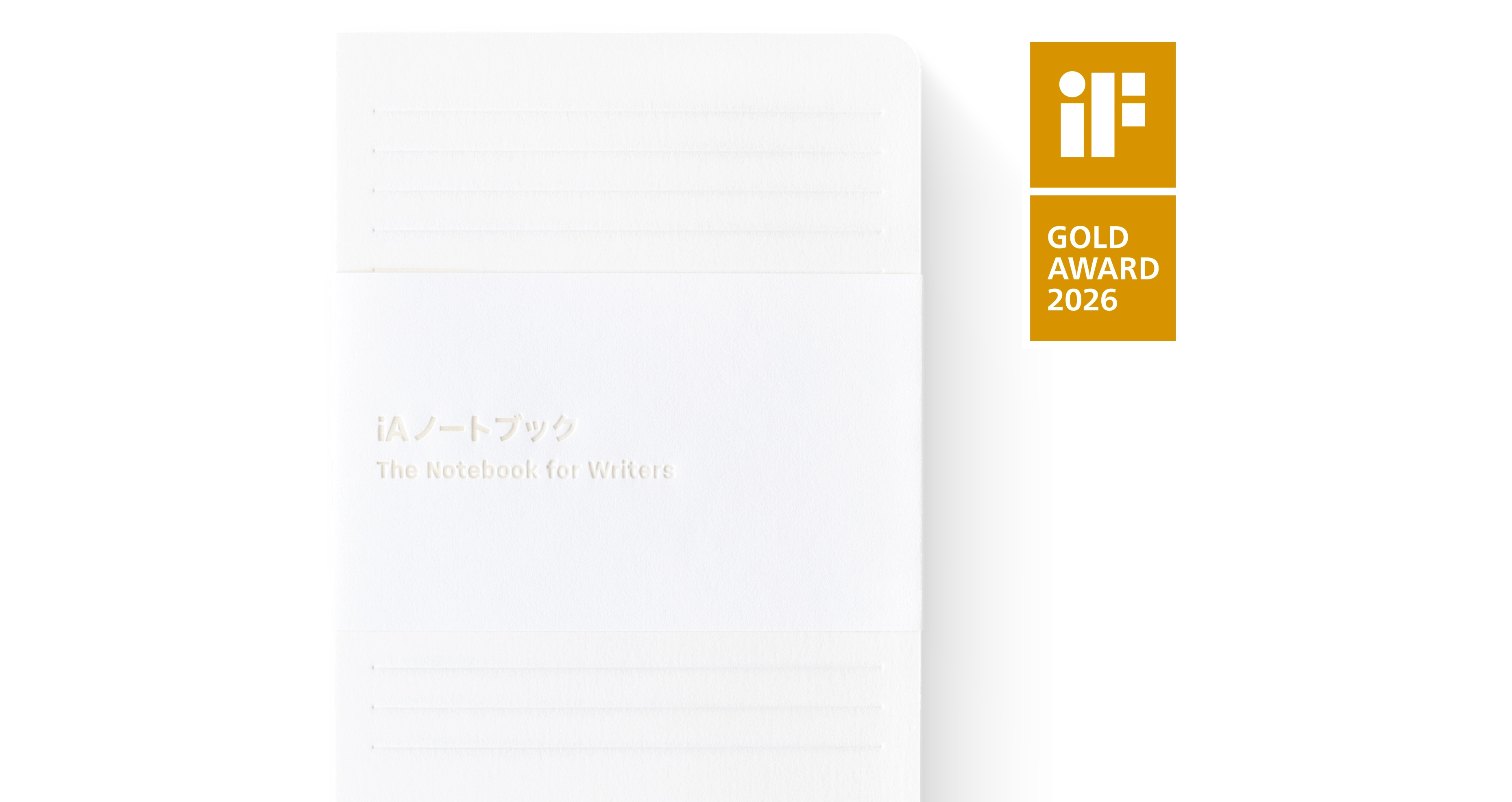
We spent ten years developing an analog notebook. Its ruled lines are watermarks in the paper. It won three product design awards. You can imagine how annoying it is to have AI complicate our company name and now even the word “watermark”. We believe that the best, most memorable and most impactful writing is done on paper. We’re also sure that to improve the mess we’re in with information technology, we can’t just ignore it. We need to do everything in our power to improve the tools we have. So even though some may read “iA” as a radical inversion of AI and others mistake it for a Latin version, we’re neither naively for nor radically against technology. We give our best to neither follow the hype nor oppose what’s new. We don’t look left or right to shape our opinions. We look back to avoid repeating mistakes, and we look ahead to anticipate issues, reimagine what we have and improve what we can. ↩︎